2/1/2024: How to Meditate (One Perspective)
As a result of last week’s newsletter, someone directly asked me how to meditate. So that made coming up with this week’s topic easy!

First of all, this is my current perspective, developed over quite a few years. In that time, I’ve been working on making it easier and more accessible for both myself and those I teach.
There are many valid forms of meditation, and I enjoy learning about them. No matter what you choose, the main thing is: you have to do it! I suggest close to the same time every day, and treating it as part of your schedule just like going to work or running your errands.
I’ll put my how-to in steps:
1. Sit with back tall yet not tense, feet on ground, hands on legs.
2. Set timer for 3 minutes, with a pleasant sound to let you know when finished.
3. Close eyes lightly, so face is soft (eyes open OK, too).
4. Notice the movement of breath at the tip of the nose.
5. Shift awareness to full breaths from nose into lungs.
6. Follow path of breath down to low rib cage on inhale, up and out of nose on exhale.
7. When timer ends, turn off alarm and sit for a few more breaths.
Not so hard, right?
But what about all those thoughts that creep in? Notice them, even say hi and bye to them, then return to breath awareness.
And what are the benefits? Well, I’ll let you discover them. But an awesome one you’ll notice right away is just taking quiet, still time for yourself.
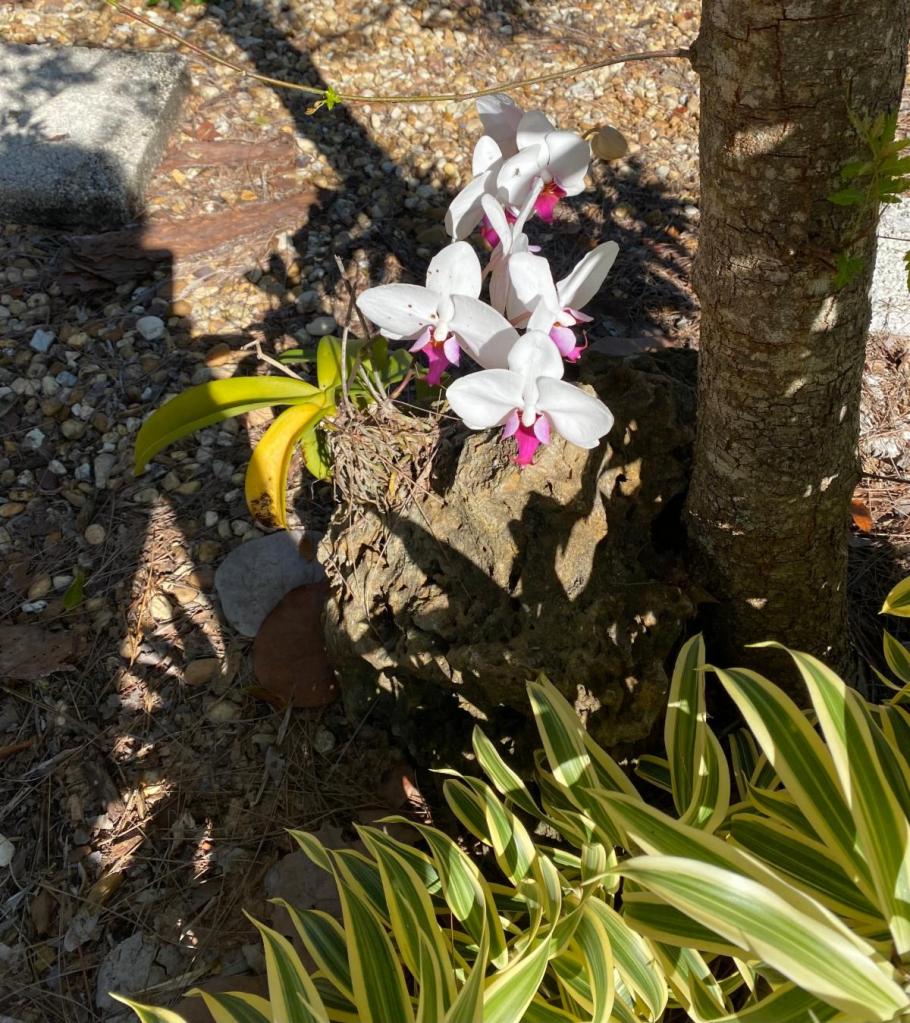
Finally, what about those photos? Well, the main reason is they’re pretty and eye-catching! And when we’re not working, Anna and I love tending to our yard. These orchids have wrapped their roots right around the rocks, and they are two of at least 20 orchids we have in various interesting spots all over the yard.
Happy meditating – I’d love to hear how it goes for you!
2/8/2024: A Variation on the Squat (Sumo)!
My very first newsletter last year was about the body-weight squat – many of you already know how important I think it is! (Ask just about anyone who teaches or studies fitness seriously – if they don’t say the squat is the most important movement, it’s almost certainly in their top three.)
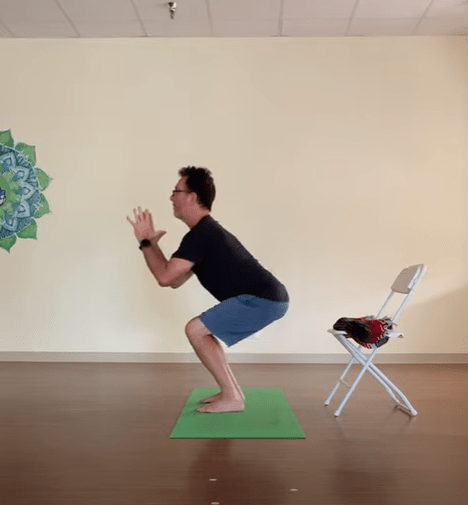
In the photo in which I’m squatting toward a chair, I’m doing a traditional body-weight squat. Now, the main reason we want to be able to do squats is so we can get up and down from chairs and couches without having to use our hands. (Try sitting down in a chair and then standing back up hands-free – that’s why we squat. If that’s easy, hold onto a weight while you do multiple repetitions.)
A realistic goal (now, this is just an estimate, but I have my reasons) of a well-rounded fitness routine is to do body-weight squats 3 times a week, 3 sets of 12-15. But if you just did the traditional version, you’d likely get bored, and your body would adapt and it would become not as beneficial.
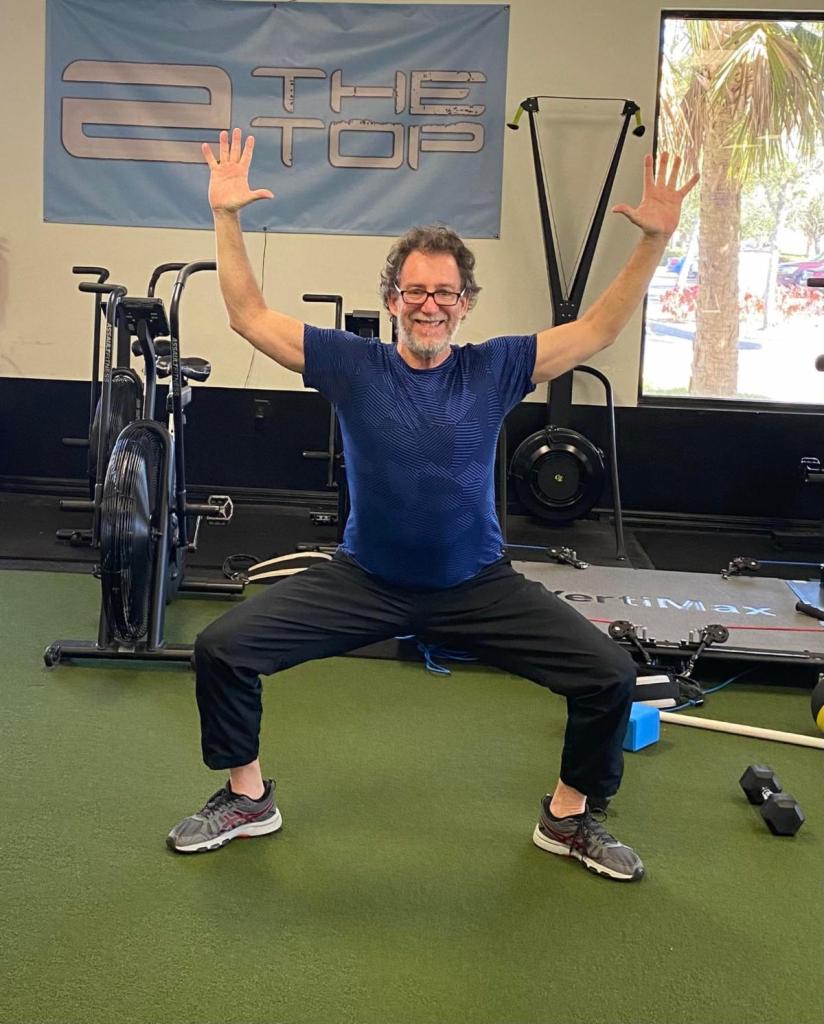
And so … try the sumo squat! (If you don’t know what a sumo wrestler is, do an online search.) In yoga, it’s called a goddess squat; in some martial arts, it’s horse stance. In the photo with my arms out, that’s goddess – Start with legs wide, feet turned out and arms overhead, then squat into the position I’m in – drive the knees out toward the second and third toes.
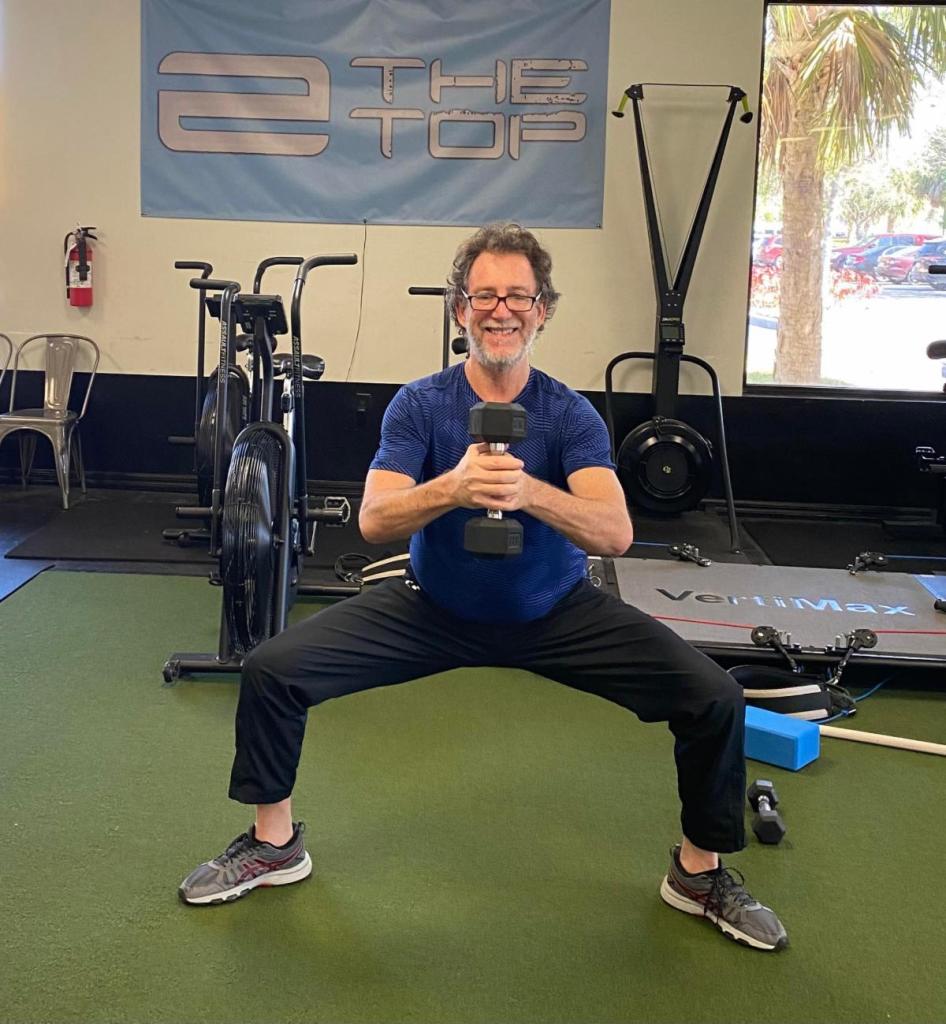
In the other sumo photo, I’m holding a weight. Weight offers more resistance which, among other benefits, challenges the core. I’m also practicing grip strength – I suggest doing 6-8 squats with one hand over the other holding the weight then switching hands. At the bottom of the squat, the shoulder should be over the thighs – that’s better for the back than a straight-up spine, especially when holding weight.
As always, I’m happy to answer questions or receive any feedback. Happy squatting!
2/19/2024: Step Up your Home Workouts!
Most of us keep some kind of exercise equipment around the house – yoga mat, dumbbells, jump rope … the list goes on. And a lot of that gear, despite our best intentions, winds up just gathering dust.
That goes for me, too. As I was taking inventory, I found kettlebells, medicine balls, agility squares, and even Indian clubs! And it got me thinking (and asking Anna) – if I had to get rid of all of it but one piece, what would I keep?
We both had the same answer – a step-up step!
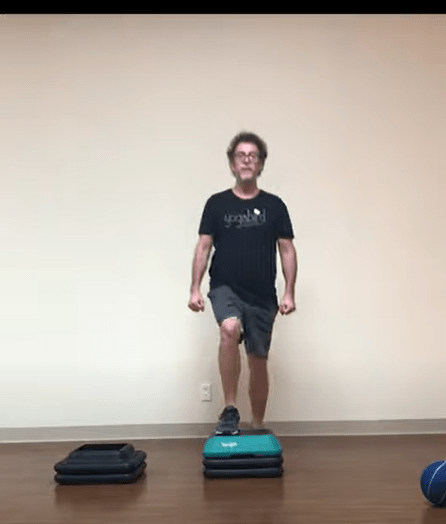
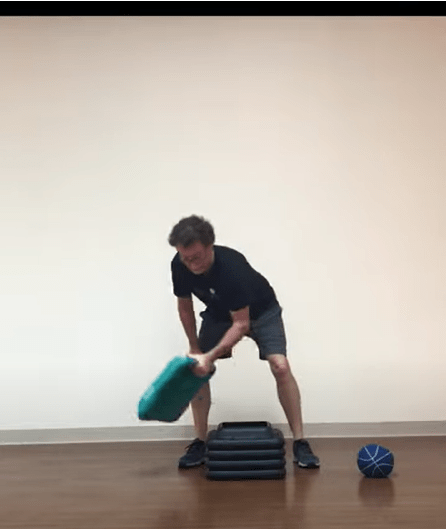
We suggest the one shown, for which you can adjust the height. We ordered ours online – it’s the Amazon brand. It has great versatility for a whole-body workout – obviously, you can step up and down in a variety of ways, and you can also use it for upper-body and core work.
Upper body example – push-ups with one hand on a box and the other on the floor. Core example – hands on a box in incline plank, knee toward opposite elbow. For more, you can seek out online videos or, even better, work out with me!
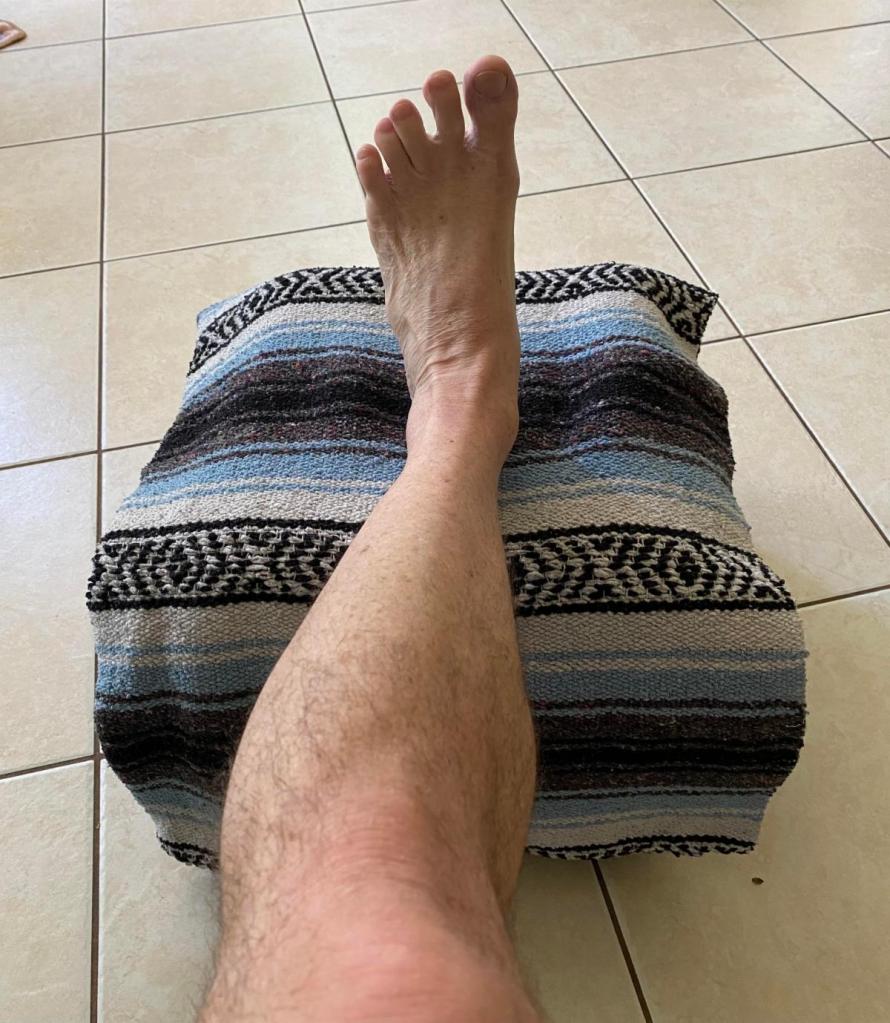
And when you’re not using it? Well, toss a blanket over it and it becomes an ottoman!
As always, thanks for reading!
2/19/2024: Why Go Barefoot?
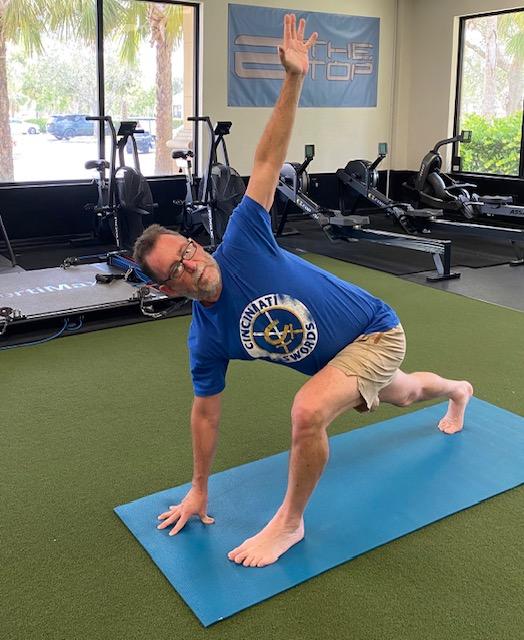
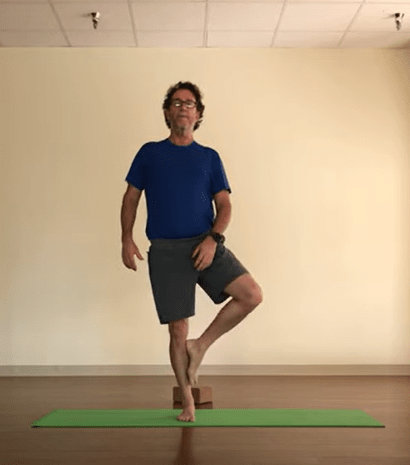
One thing all three of the photos in this week’s newsletter have in common: I’m barefoot.
I spend a lot of time barefoot, and quite simply I just often prefer it to wearing shoes. And of course, going shoeless in Florida year-round is a whole lot easier than it was in Ohio. Also, I understand that we all have to be very careful where we’re walking barefoot!
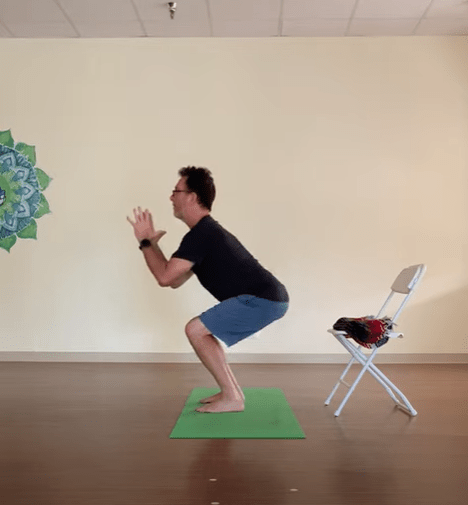
Injuries to the foot or ankle may certainly mean keeping the shoes on. And if you’ve had a health care professional tell you that being barefoot is not good for you personally, then by all means heed that advice.
But if you can do it, you can learn a lot about your posture, movement, and balance from comparing what you’re doing with shoes to without. The direct contact of your feet to the floor (or turf, or mat, etc.) promotes a nervous system response and a certain connection of body to brain. (Let’s leave it at that for now – I’m happy to tell you more if you’re interested.)
In the first photo, I’m squatting – I can tell that my feet are straight forward, and that my weight is more toward the heels. From there, I could stand up tall and try to come onto the balls of my feet. But if I were going to jump, I’d want to be in shoes.
In the second photo, I’m in a lunge twist – working to keep my front foot fully on the ground and my back foot facing forward with my heel off the ground. But if I were doing this movement moving forward across the floor, I’d likely be wearing shoes.
And in the third photo, I’m in tree pose – of course, most yoga is done barefoot. Here I can feel my standing foot fully supporting me and my lifted foot firmly pressed into my calf.
When I’m working out at the gym, I am almost always in shoes, especially if I’m going to be running or jumping. And of course there are safety reasons, being aware of where and how you step around all that equipment.
But if it makes sense in your fitness routine, consider trying some of it barefoot. You just might learn something super cool and useful!
 Fitness With Chip